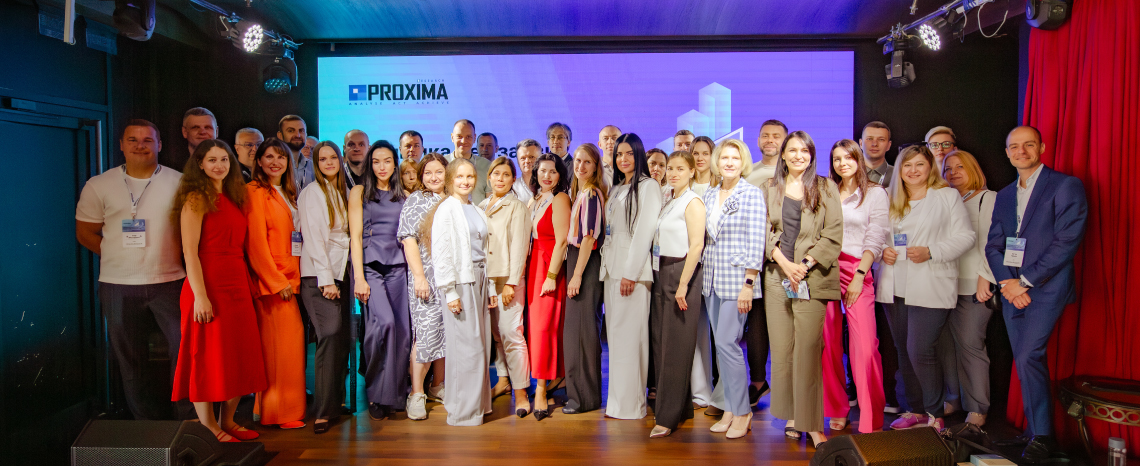
On June 11, 2026, the Proxima Research business breakfast titled “Effortless Analytics: Power BI and AI in Practice” took place in Kyiv, at the GHOST restaurant, 55 Velyka Vasylkivska St.
The event brought together representatives of pharmaceutical companies — Proxima clients, many of whom currently work in QlikView and are evaluating the move to Power BI. A distinctive feature of the format was that Proxima Research experts spoke alongside the company’s own clients, who shared their personal experience of working with the new analytics platform. It was this kind of live dialogue between those who build analytics solutions and those who use them every day in business that became the main value of the meeting.
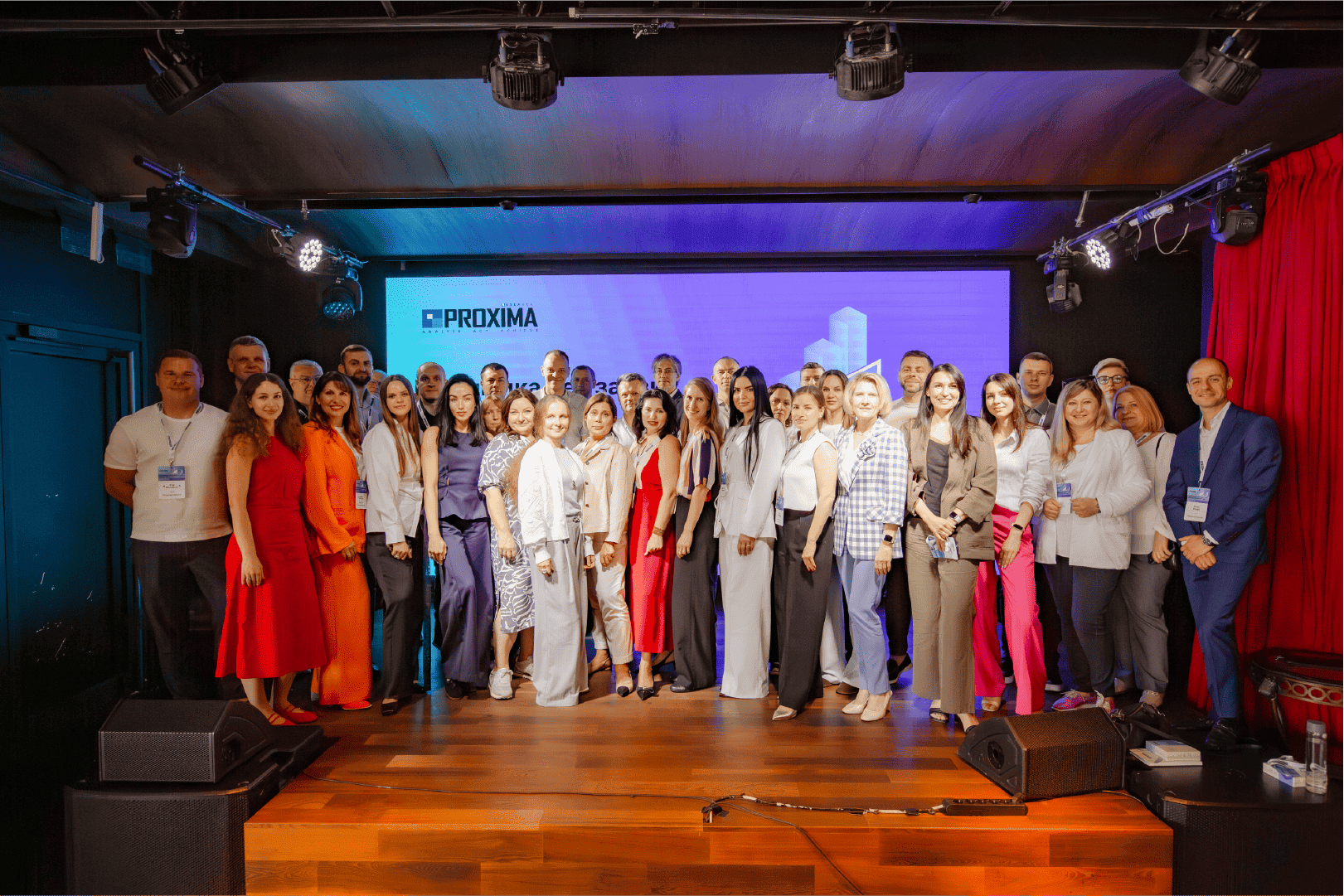
Effortless Analytics: Highlights from the Proxima Research Business Breakfast on Power BI and AI
Morning Agenda
The event opened with registration and a welcome coffee, after which participants listened to several substantive presentations:
- Opening remarks — Olena Lahutina, Head of CSM, Proxima Research International
- Comprehensive Promo/Rx Pharmaceutical Analytics — Tetiana Draha, Product Owner PromoRx, Proxima Research International
- Power BI Ecosystem: Client Case Study — Yana Vlasenko (Laboratoire Innotech International) and Zoriana Varchuk (Sona-Exim)
- AI Agent in Analytics — Tetiana Ivanova, Product Owner Market Audit Ukraine, Proxima Research International
The morning concluded with dessert and networking — in an informal atmosphere, participants continued discussing what they had seen and heard.
From Promotional Activity to Market Decisions
The first to speak was Tetiana Draha, who presented the comprehensive pharmaceutical analytics solution PromoRx — a solution that combines promotional activity assessment with market analysis and helps move directly from data to market decisions.
The product’s key advantage is working in a single monthly dashboard, where the market picture is updated regularly and consistently. Within PromoTest and RxTest, users get a market overview, an assessment of interactive dynamics, as well as analysis of prescriptions by diagnosis, patient flows, comorbidity and co-prescription — all of it now available on a monthly basis.
Particular attention is paid to split market analysis by patient characteristics: demand structure can be examined along two axes at once — for example, age × gender — providing a basis for precise targeting and identifying the segments with the greatest growth potential. The tool also allows comparing up to four brands simultaneously across a single set of indicators, viewing one’s own brand alongside competitors in month-by-month dynamics.
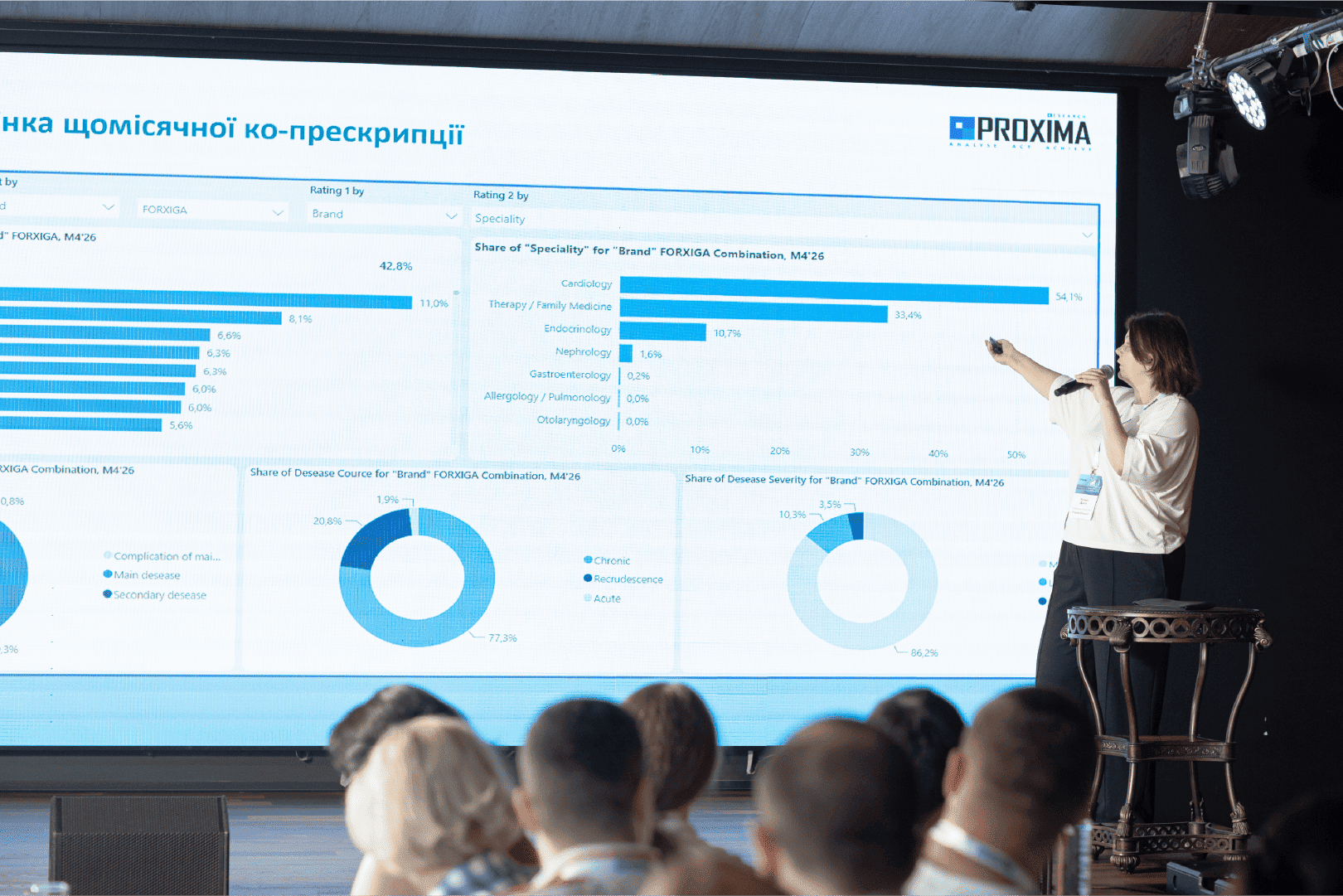 Tetiana Draha, Product Owner PromoRx, Proxima Research International, presenting on comprehensive Promo/Rx pharmaceutical analytics.
Client Case Study: New Opportunities and More Time for Analytics
The relay was continued by Yana Vlasenko, Marketing Manager, Laboratoire Innotech International who looked at Power BI through a marketer’s eyes. She built her presentation around a simple but familiar question: what is a marketer’s biggest pain point — and is there a “magic pill” for it?
But Yana’s main focus was on what the new platform delivered. The transition from QlikView to Power BI went remarkably smoothly and essentially came down to a single click.
And then the most interesting part began: analytics became faster and more convenient, freeing up time for creative approaches and deeper data exploration instead of routine report preparation.
Among the things she liked most, Yana named the speed and convenience, the ability to open several tabs with different reports at once, and the implementation of the one-page view concept — several charts and reports on a single screen, which was exactly their idea. She also highlighted the ability to dive deeper into the data (dive deeper) with a simple mouse hover. According to her, the new platform didn’t just speed up the work — it opened up new opportunities and left more room for analytics and creative solutions.
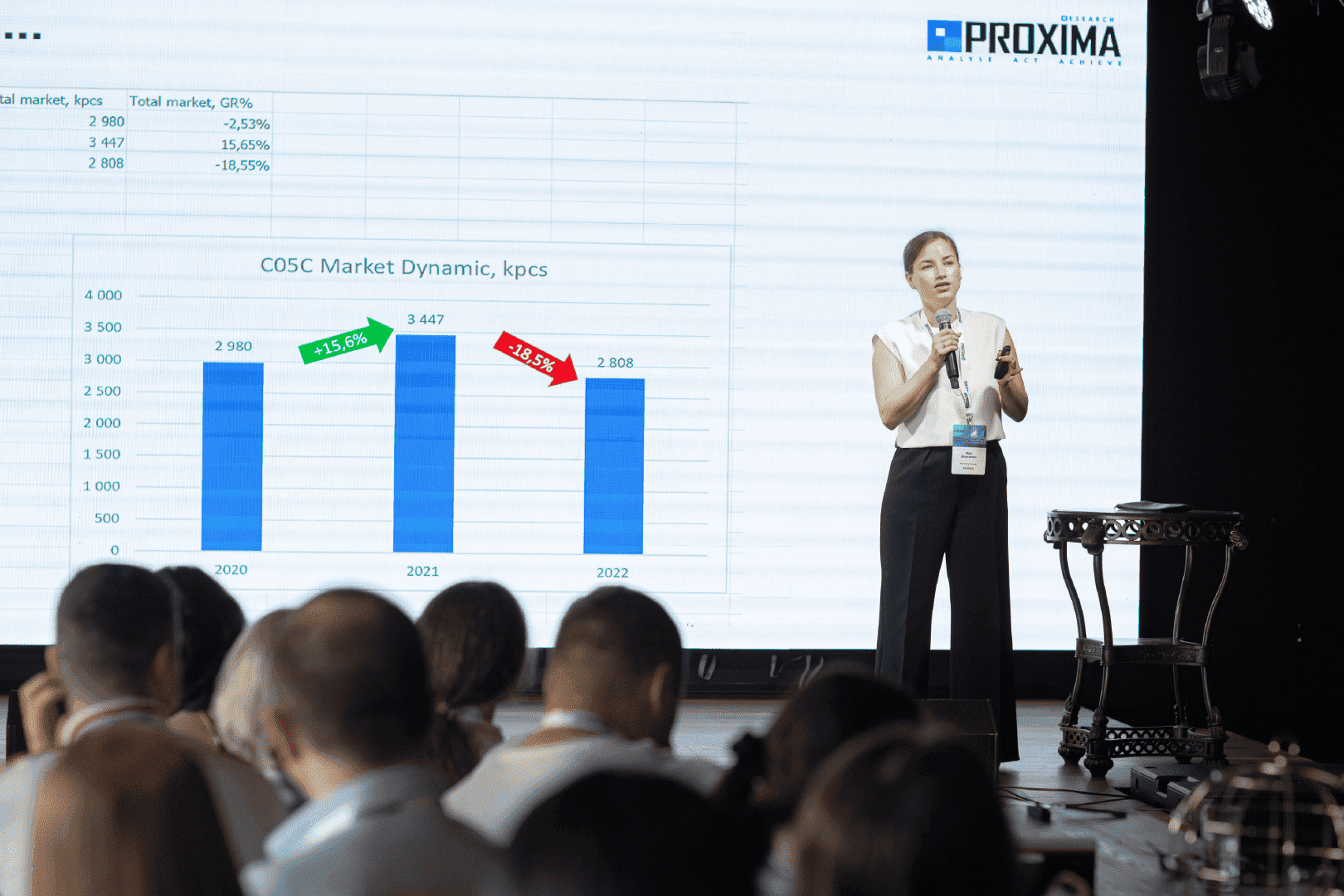
Yana Vlasenko, Marketing Manager, Laboratoire Innotech International shares her experience of transitioning from Qlik to Power BI and the new platform’s impact on the speed of preparing analytical reporting.
Client Case Study: Comprehensive Analytics in a Single Environment
Zoriana Varchuk, Head of Marketing and Sales Force Excellence at Sona-Exim (UA, KZ), showed how the Power BI Ecosystem works in the company’s day-to-day analytics. At the core of the solution is an integrated architecture that combines Proxima Cloud CRM for field force management, Axioma as a syndicated database of physicians and medical facilities for precise targeting, GeoForce for territory management, Proxima PAS for strategic sales planning, and WHS and DWH for sales data processing.
Zoriana demonstrated how comprehensive analytics works in a single environment: market data, distributor sales, and retail sales are all brought together here. Moving from a general overview to a specific product, the user goes directly to retail sales, where promotion data from across the entire market is automatically pulled in alongside the company’s own figures. The result is a complete picture: what the targets were, what the sell-out was, and which promotion influenced the outcome.
The depth of detail is especially impressive. The analysis can be progressively expanded from a general market overview down to the addressable market, then further to individual groups and each participant within a group. Likewise, the system allows drilling down from the national country level to specific medical representative territories — not just seeing what is happening in each area, but also analyzing who is driving plan achievement and who is lagging, who has already hit their target and will hit it again, and who is slowing the region down in achieving results.
“This isn’t just a tool. It’s genuinely a fantastic product, and I’m deeply grateful to the entire Proxima team that delivered this project. Thanks to the team’s expertise, we’ve already covered 97% of all our needs.”
— Zoriana Varchuk, Sona-Exim
The speaker also gave special attention to the GeoForce tool, which integrates data into the DWH dashboard and helps medical representatives see not only the overall picture but also the detailed situation within their own area of responsibility.
In closing, Zoriana thanked the Proxima team for delivering the project, as well as the marketing, commercial, and sales specialists at Sona Exim for their active participation in implementing the solution. It was thanks to their collaboration and ongoing feedback that the system could be adapted as closely as possible to real business needs.
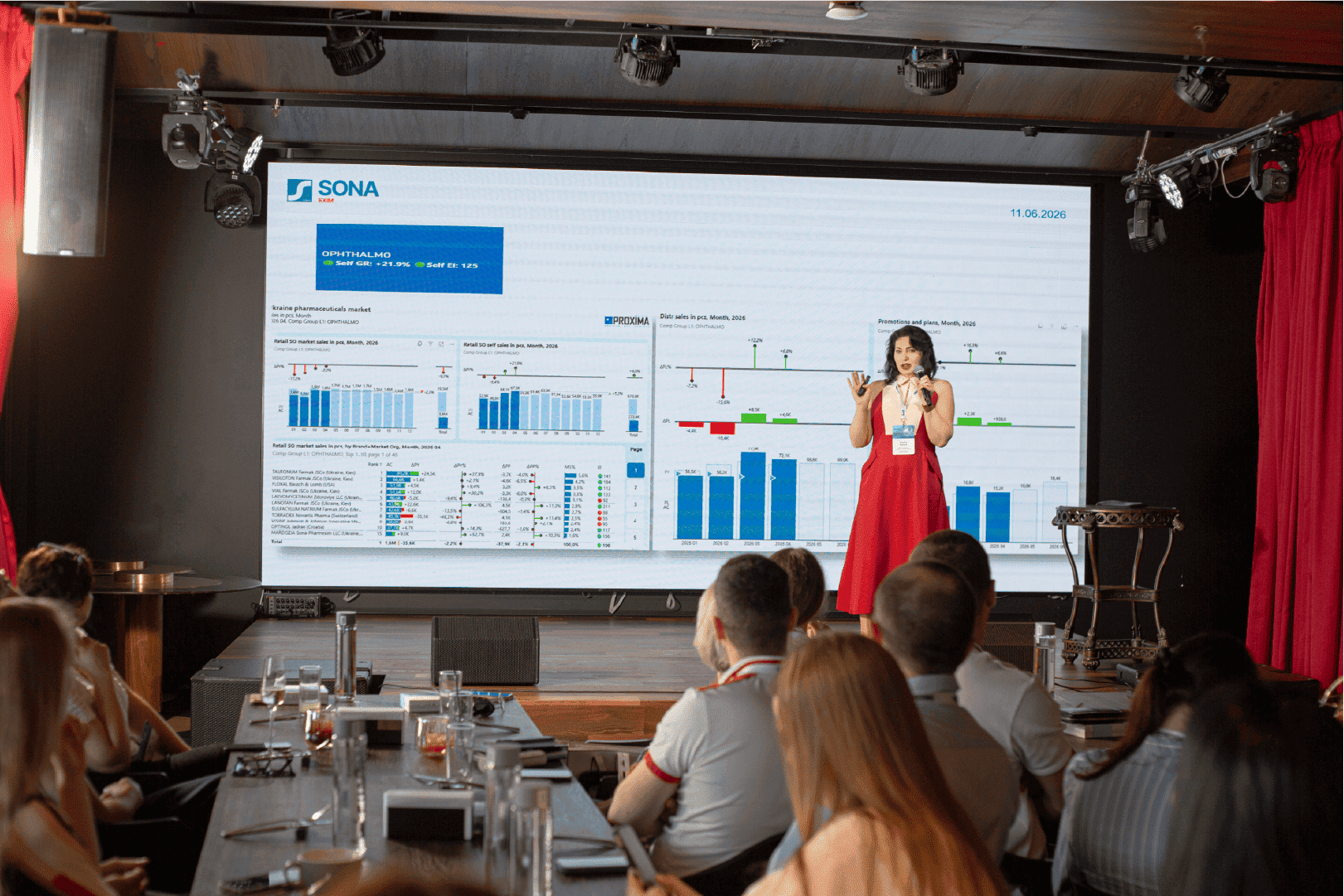
Zoriana Varchuk (Sona-Exim) presenting the Power BI Ecosystem client case study.
AI in Focus: Forecasting with Responsibility
The discussion around the Sona-Exim case naturally led participants to the topic of AI-powered forecasting. Proxima’s experts explained that forecasting tools already exist at the company — built on an ensemble of models and domain expertise. That is precisely why AI does not forecast on its own: it operates within verified business data, and the final conclusions remain with the human.
All Proxima solutions go through multi-level testing — this is a fundamental quality requirement. There is plenty of talk in the market about AI hallucinations, where a model generates inaccurate conclusions; that is exactly why the final decision always remains with the specialist. Forecasting functionality at Proxima is already available — it is built into the analytical dashboards and is based on an ensemble of models and verified business data. In PharmXplorer AI it will appear soon — and it’s no longer a question of “whether,” but a question of time.
Broader Context: International Expansion and the Move to Microsoft Fabric
A separate important focus of the morning was the company’s strategic development context. Proxima Research is currently growing actively at the international level: in addition to Ukraine, Kazakhstan, and Uzbekistan, the company already has offices in Latin American countries, Brazil, and the US. International expansion provides access to new technologies, partnerships, and resources, allowing the company to accelerate the development of analytical products and adopt the best global data practices.
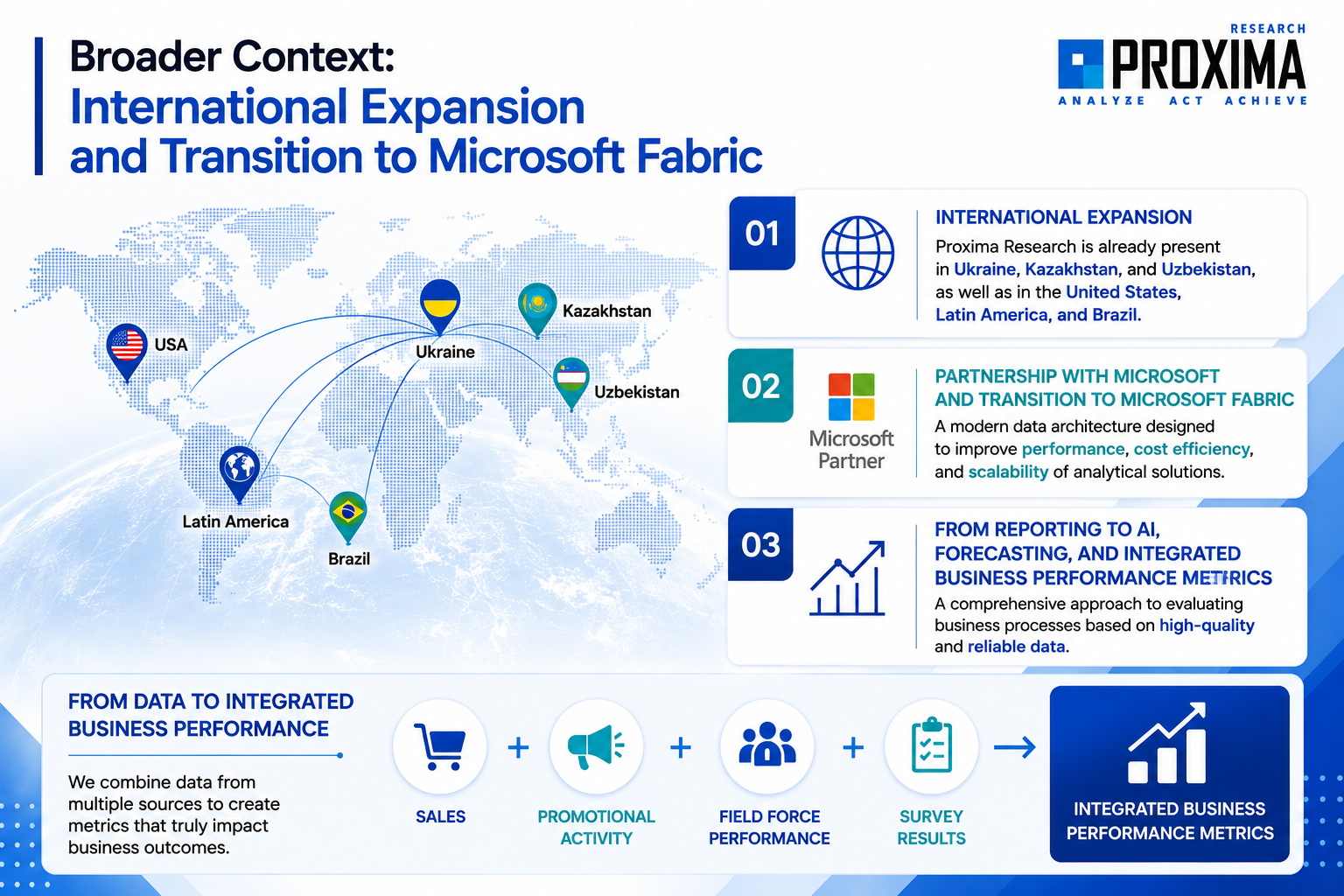
The company actively invests in development, expands partnerships, and applies advanced technologies. In particular, Proxima is gradually transitioning to a modern data architecture based on Microsoft Fabric, which increases data processing speed, optimizes solution costs for clients, and opens up new opportunities for scaling and integrating analytics.
To sum up, this block points to three strong pieces of news:
- Proxima’s international expansion — the US, Latin America, Brazil.
- Transition to a modern data architecture based on Microsoft Fabric.
- Movement from simple reporting to AI, forecasting, and integrated business performance indicators.
After all, the future of analytics is not just about dashboards, but a comprehensive approach to evaluating business process efficiency. Combining sales data, promotional activity, field team performance, and survey results makes it possible to build integrated performance indicators and gain a deeper understanding of the factors that drive business outcomes. The key requirement for building such models remains unchanged — quality, reliable data.
From Data to Decisions: AI Agent in Analytics
A logical continuation came in the form of a presentation by Tetiana Ivanova, dedicated to the new opportunities that Power BI and AI bring to pharmaceutical analytics. Her main thesis: moving to Power BI is not just a new interface, but a foundation for a new class of analytical and AI solutions built within a unified decision-making ecosystem.
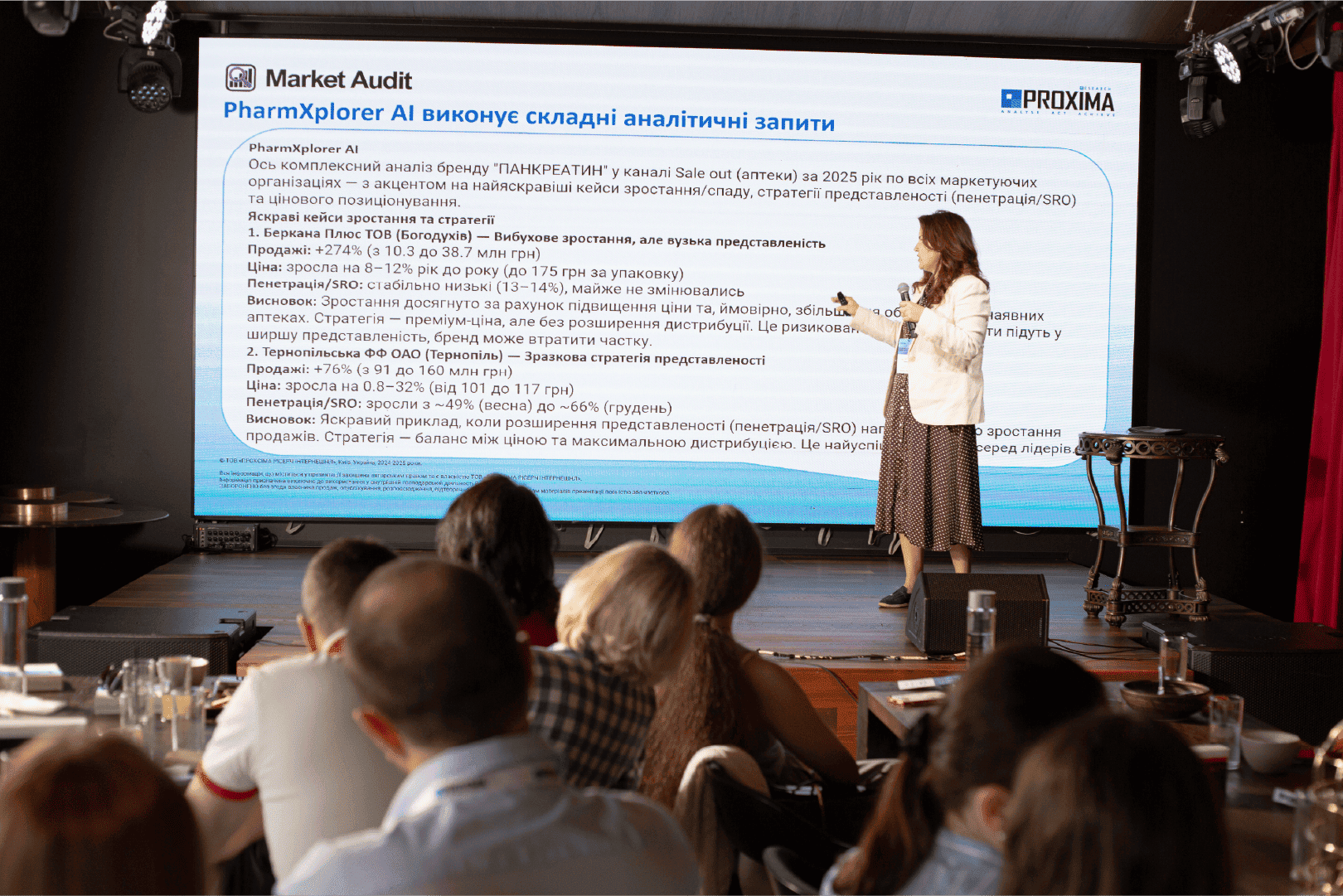
Tetiana Ivanova, Product Owner Market Audit Ukraine, Proxima Research International, presenting the capabilities of PharmXplorer AI and AI agents.
The new platform also opens up new dimensions of analysis — and therefore new answers for business. Group Analysisshows who is really taking away our market share, given that different market segments evolve under their own conditions and rules. Commodity Analysis reveals which segments are most vulnerable to substitution. And Win/Loss Analysis reveals more broadly where we are winning and where we are losing ground — who is driving the market and who is dragging it down, both among market participants and within the team’s own work.
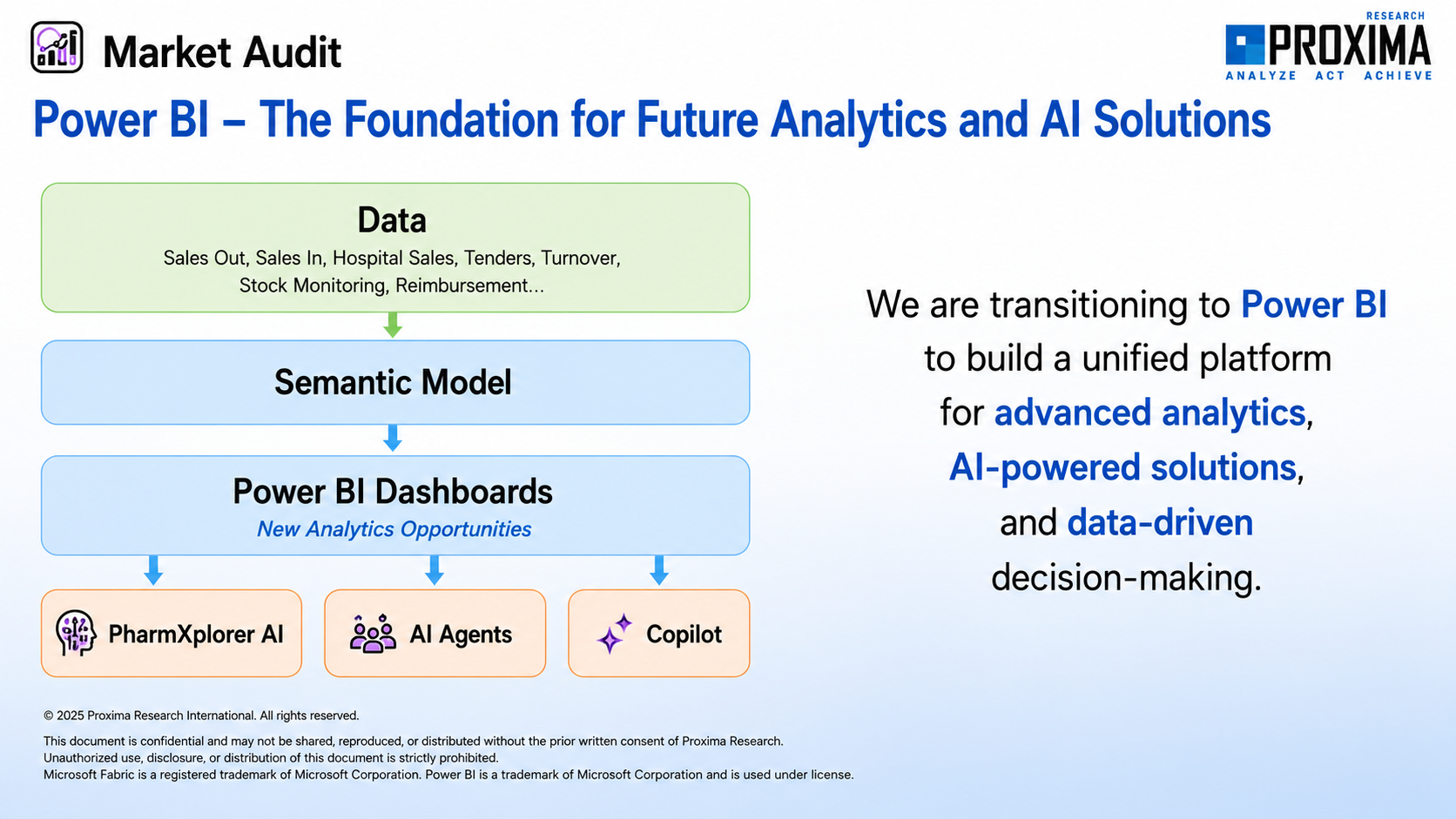
PharmXplorer AI — A Personal AI Analyst
The central focus of the presentation was PharmXplorer AI — an AI analyst for Market Audit that analyzes the market (growth and decline drivers, changes in market structure), competitors (who is taking share, who is growing faster, new threats), and produces ready-made analytical conclusions explaining key changes.
Tetiana demonstrated this with a live example: with a single natural-language query, you can ask for an analysis of an entire brand over a year across all SKUs — and receive a structured response with the most striking cases of growth and decline, along with an assessment of presence strategies and price positioning. Instead of hours of manual work — a comprehensive portfolio analysis from a single query, with specific conclusions about which strategies worked and which turned out to be risky or unsuccessful.
One of the key advantages of such solutions is freeing up time for higher-value work. Already today, PharmXplorer AI takes on part of the routine analytical tasks, helping to quickly find the necessary data and form conclusions. As a result, specialists can devote more attention to strategic planning, identifying new opportunities, and making management decisions.
Power BI + Copilot: The Next Step of Integration
It was the announcement of the Power BI and Microsoft Copilot integration that sparked a lively discussion, interest, and questions from participants at the event. Proxima’s experts explained that Power BI and Copilot are part of a single Microsoft ecosystem, so their integration is a natural stage of development.
The core idea is that data users already analyze in Power BI today could be used directly by AI tools to speed up analysis and surface insights. Going forward, Copilot will help formulate queries, find patterns, interpret results, and prepare analytical conclusions. In this way, Power BI is gradually evolving from a visualization tool into a platform for interactive analytics work supported by artificial intelligence.
AI Agents and Automated Presentation Preparation
The development roadmap presented at the event outlines a clear evolution:
Dashboards → PharmXplorer AI → Copilot → AI Agents → comprehensive AI analytics.
The next steps already have dates: Copilot for Power BI — June 2026 (working with data in natural language) and AI Presentation Agent — July 2026 (automated presentation preparation based on data).
Special Conditions for Switching to Power BI in 2026
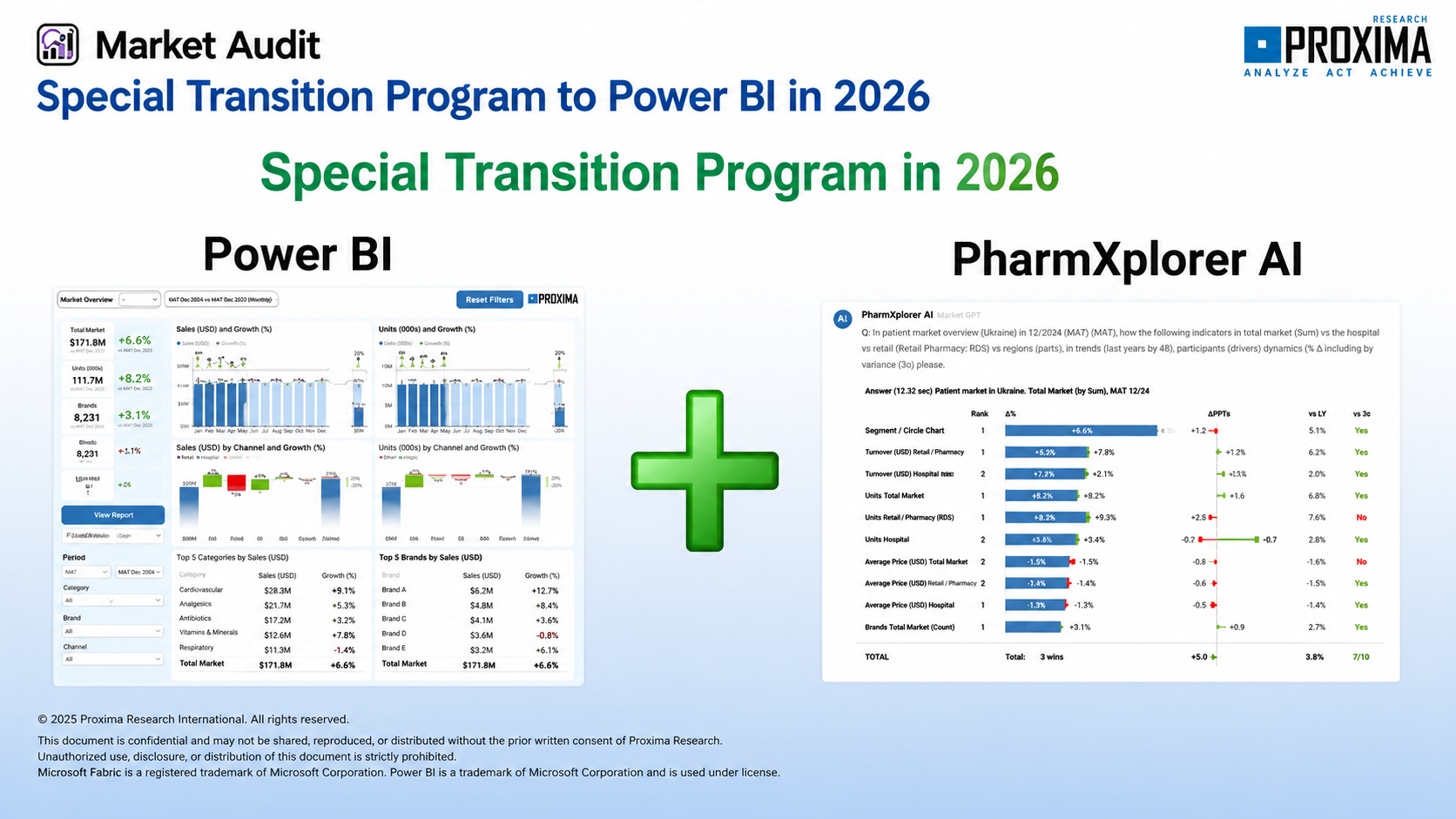
In 2026, Proxima Research is going through an important transformation stage and moving to a new model for using Microsoft technologies and Power BI. This is exactly what allows the company to offer clients special transition conditions for moving to the new platform.
An additional bonus for those who switch to Power BI in 2026 will be access to PharmXplorer AI — meaning not just modern dashboards, but also a personal AI analyst for quickly finding insights. For companies still evaluating the transition, what’s offered is not just a pilot, but a full one-month project to assess the benefits:within its scope, you can test full-scale work with Power BI and integrate PharmXplorer AI into daily business processes, and see for yourself firsthand how much faster and more efficiently you can work with data.
Where to Start with AI Implementation: Conclusions from the Discussion
The live discussion touched on several questions that concern most companies today.
Where to start? Participants agreed that the main thing is simply to start using AI in practice. The technology is evolving rapidly, so there is no universal implementation scenario yet. The most effective approach is to test tools on real business tasks, build up your own experience, and gradually integrate AI into work processes. For the pharmaceutical market, PharmXplorer AI, adapted to the specifics of industry data and queries, can be the best starting point.
What about ROI? Participants separately raised the question of evaluating business decisions and return on investment — and this was a clear request from the market. Proxima is already moving in this direction: for 2026, a comprehensive analysis has been announced that will combine sales, distribution, marketing activity, field team performance, and financial data for a deeper assessment of business decision effectiveness.
“The next stage in the development of analytics is moving from answering “what happened?” to understanding “why did this happen?”, “was it effective?”, and “what comes next?””
The role of humans and data security. Participants also raised two sensitive issues — the place of humans in the age of AI, and the protection of corporate data. Proxima emphasized that artificial intelligence is not viewed as a replacement for analysts or managers. Its job is to help specialists work faster with large volumes of information and automate routine tasks. This approach is also in line with international regulatory trends: within the European AI Act one of the key principles is Human Oversight — mandatory human oversight of AI’s results, under which final decisions always remain the responsibility of the human.
As for confidentiality, this is a critically important issue for the pharmaceutical industry. That is why Proxima follows the principle that corporate data remains under the owner’s control and is not used to train third-party models. The solution’s architecture is built so that AI works with prepared datasets and analytical queries rather than gaining unrestricted access to all of a client’s corporate data.
In Closing
In closing, the organizers thanked the participants for their active engagement, open dialogue, and willingness to share their experience. During the meeting, attendees discussed modern approaches to working with data, the capabilities of Power BI, the prospects of AI in pharmaceutical analytics, and practical cases of implementing new technologies. The live exchange of ideas between representatives of pharmaceutical companies was especially valuable, allowing the group to consider not only the capabilities of modern tools but also the real challenges of the industry’s digital transformation.
The business breakfast served as further confirmation that the future of pharmaceutical analytics lies in combining quality data, modern technology, and the expert experience of the people who use these tools to make strategic decisions.
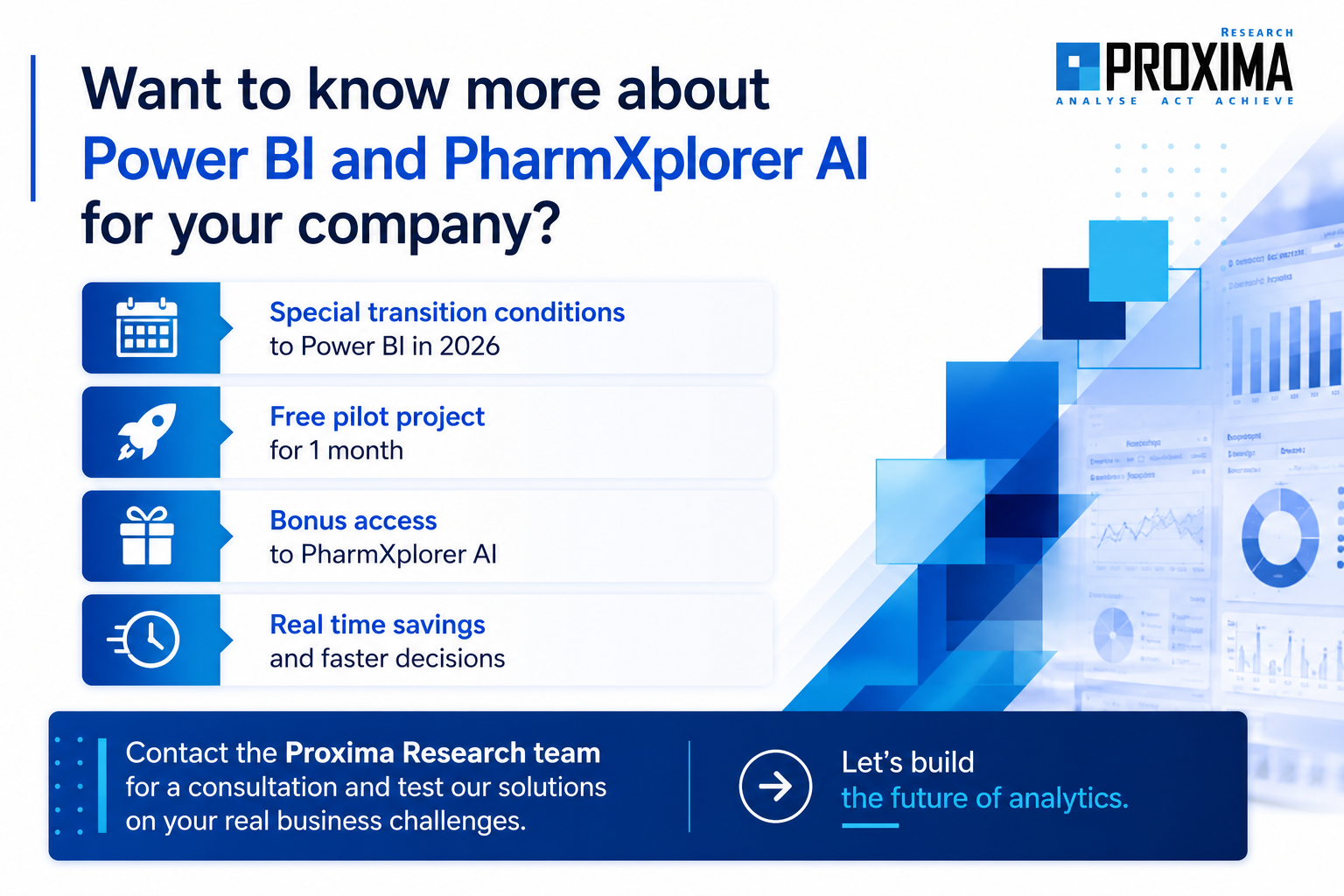
Want to learn more about what Power BI and PharmXplorer AI can do for your company? Contact the Proxima Research team for a consultation and to test solutions on your own business tasks.